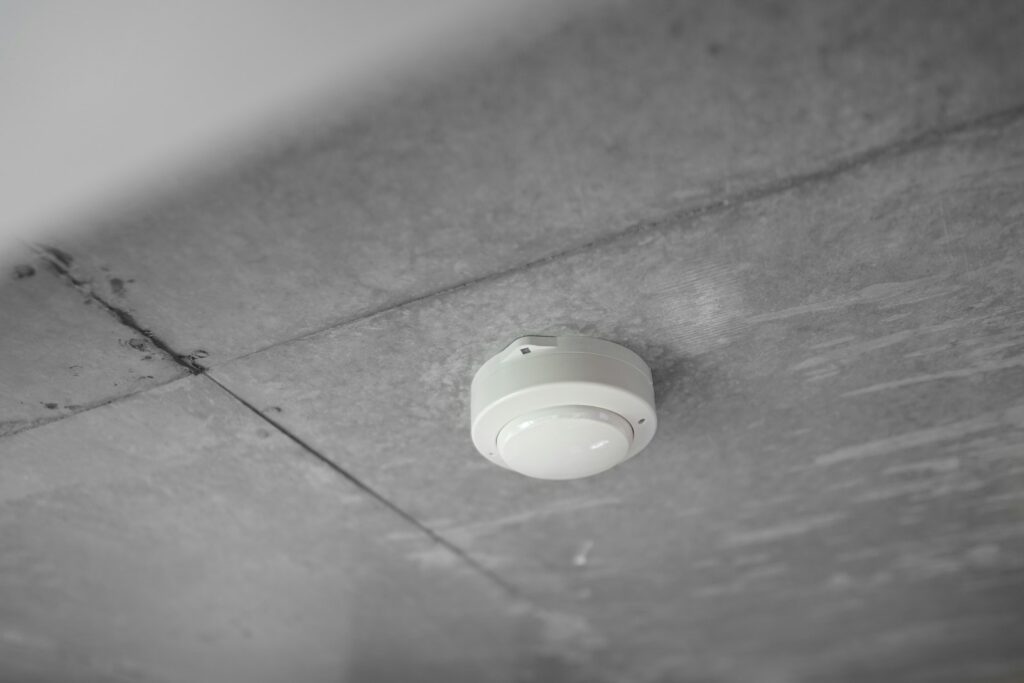
 Illustrative image
- Landlords in England must fit a smoke alarm on every storey used as living accommodation.
- Since 1 October 2022, a CO alarm is required in rooms with a fixed combustion appliance (not gas cookers).
- Owner-occupiers aren’t legally required to fit alarms in existing homes, but it’s strongly recommended.
- Heat alarms suit kitchens but don’t replace smoke alarms.
Working smoke alarms give you the early warning you need to get out if a fire starts. The rules on who must fit them, and where, depend on whether you own your home or rent it out. Here’s a plain-English summary for England.
Rules for private landlords
Under the Smoke and Carbon Monoxide Alarm (England) Regulations, as amended from 1 October 2022, landlords must:
- Fit at least one smoke alarm on every storey of the property used wholly or partly as living accommodation.
- Fit a carbon monoxide alarm in any room used as living accommodation that contains a fixed combustion appliance, such as a gas boiler or wood burner. Gas cookers are excluded.
- Check the alarms are working on the day a new tenancy starts.
- Repair or replace any alarm once they are told it is faulty.
Councils enforce these rules and can fine landlords up to £5,000 for failing to comply with a remedial notice. The regulations don’t require a particular type of alarm, but government guidance recommends alarms meeting the relevant British Standards, and sealed-for-life batteries if you choose battery units. Landlords also need a valid EICR at least every five years, which is a good moment to check alarms too.
Rules for homeowners
If you own and live in an existing home in England, there’s no general legal requirement to fit smoke alarms — but fire services strongly recommend at least one on every floor. The rules change when you carry out building work: new homes, and work such as loft conversions and some extensions, normally require mains-powered, interlinked alarms under the Building Regulations, so building control will expect them as part of the job.
Smoke alarms vs heat alarms
A smoke alarm detects smoke particles and is the right choice for hallways, landings and living areas. A heat alarm responds to a rapid rise in temperature, which makes it better for kitchens, where cooking fumes would set off a smoke alarm. Government guidance is clear that heat detectors are not a replacement for smoke alarms — they’re an addition.
Interlinked alarms are connected so that when one goes off, they all sound. That’s especially useful in houses over several floors, where you might not hear an alarm in the kitchen from a top-floor bedroom.
Battery or mains-wired?
Battery alarms are quick to fit, but they rely on someone replacing the battery. Mains-wired alarms with a battery backup, wired by an electrician, are more reliable and can be interlinked. If you’re a landlord with several properties, or you’re renovating, they’re usually the better long-term option.
Whichever you choose, test your alarms regularly and replace them by the date the manufacturer recommends.
Want mains-wired, interlinked alarms fitted or checked? X Electricians can help. Call 07539 376177 — we’re NAPIT-registered, cover North West London 24/7 and never charge a call-out fee.
- GOV.UK – Smoke and Carbon Monoxide Alarm (Amendment) Regulations 2022: guidance
- Legislation.gov.uk – The Smoke and Carbon Monoxide Alarm (Amendment) Regulations 2022
This article is general guidance, not legal advice. Always check the latest official guidance for your situation.