
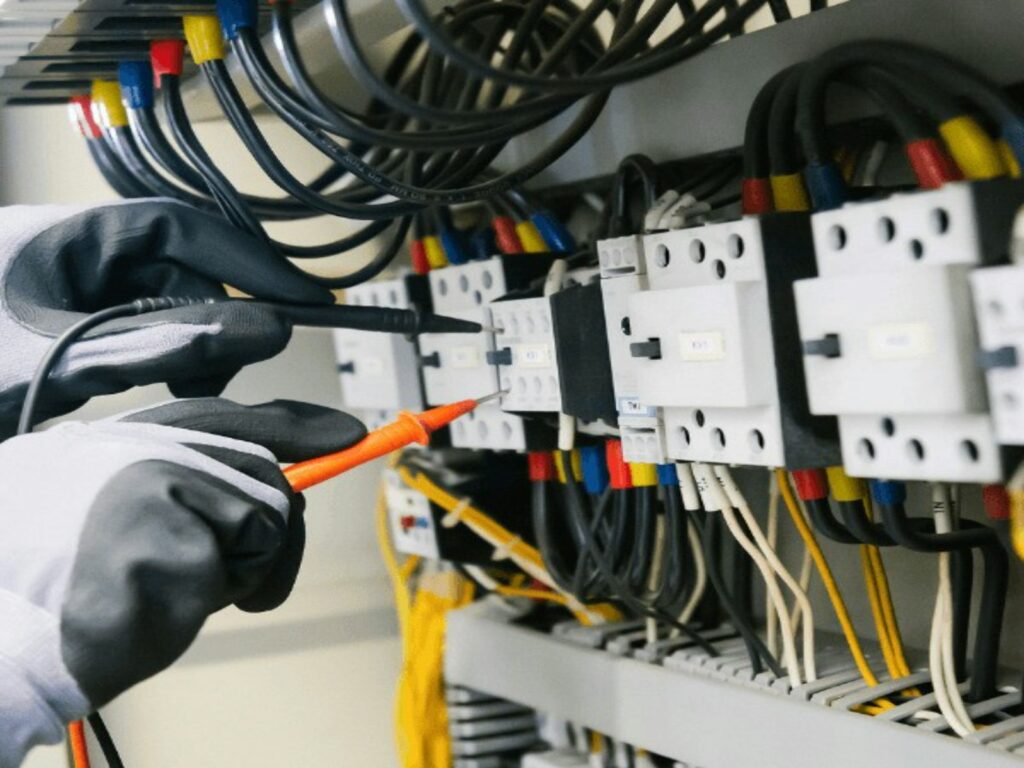
 Illustrative image
- An EICR checks the condition and safety of your fixed wiring, not your plug-in appliances.
- Results are coded C1, C2, C3 or FI; C1 or C2 makes the report unsatisfactory.
- Most flats and small houses take a few hours; bigger homes take longer.
- Landlords in England need one at least every five years.
An Electrical Installation Condition Report (EICR) is a detailed inspection and test of the fixed electrics in a property — the wiring, consumer unit, sockets, switches and light fittings. Landlords in England must have one at least every five years, and Electrical Safety First recommends owner-occupiers have one at least every ten years, or when buying a home. But what does the electrician actually do while they’re there?
What the inspection covers
The inspection is carried out against BS 7671, the UK wiring regulations. The electrician will look at and test things such as:
- The consumer unit — its condition, suitability and whether circuits have the right protection, including RCDs.
- Earthing and bonding — the connections that make faults safe and stop metal pipework becoming live.
- Wiring condition — signs of age, damage, overheating or outdated cable types.
- Sockets, switches and fittings — cracks, scorching, loose fittings and old-style accessories.
- Overloading and signs of circuits being asked to do more than they were designed for.
- Bathrooms and outdoor circuits, which need extra protection.
- DIY or defective work and any changes that weren’t done properly.
Testing involves isolating circuits and using specialist instruments to measure things like insulation resistance and how quickly protective devices disconnect. An EICR doesn’t usually involve lifting floorboards or opening walls — it’s a sample-based inspection of what can reasonably be accessed.
Understanding the codes
Any issues are recorded with a code:
- C1 – danger present. Immediate risk of injury; the electrician will make it safe before leaving.
- C2 – potentially dangerous. Needs urgent remedial work.
- C3 – improvement recommended. Not unsafe, but doesn’t meet current standards.
- FI – further investigation. Something needs looking into in more detail.
A C1 or C2 means the report is “unsatisfactory”. Under the latest edition of the wiring regulations, BS 7671:2018+A4:2026, an FI on its own no longer makes a report unsatisfactory — but it still needs following up. C3s alone don’t make a report unsatisfactory.
How long does an EICR take?
It depends on the size of the property, the number of circuits and how easy everything is to reach. As a rough guide, a one- or two-bedroom flat usually takes a few hours, while a larger family house can take most of a day. Older or extended properties with several boards take longer.
The power will be off at times during testing, so it’s worth saving any work on your computer and letting tenants know in advance. Clear access to the consumer unit and to sockets behind furniture also speeds things up.
What it costs and what happens next
Our EICRs start from £140 for a one- or two-bed property, £180 for three bedrooms and £220 for four or more. You’ll receive a written report, and if anything needs fixing we’ll explain it in plain English and give you a clear price. Landlords must give a copy to existing tenants within 28 days and arrange any required remedial work within 28 days (or sooner if the report says so).
Need an EICR for your home or rental? Call 07539 376177 — we’re NAPIT-registered, cover North West London 24/7 and never charge a call-out fee.
- Electrical Safety First – Periodic inspection and testing
- GOV.UK – Guide for landlords: electrical safety standards in the private rented sector
- NICEIC – Understanding BS 7671 Amendment 4:2026
This article is general guidance, not legal advice. Always check the latest official guidance for your situation.