
 Illustrative image
- Amendment 4 of the Wiring Regulations adds a new chapter for home battery storage, in force since 15 October 2026.
- The Future Homes Standard, published 24 March 2026, applies to new homes from 24 March 2027: solar PV and low-carbon heating such as heat pumps.
- It doesn’t apply to existing homes — but more people are adding batteries, solar and heat pumps anyway.
- Before you do, it’s worth checking your consumer unit, earthing and supply can cope.
Batteries, solar panels and heat pumps used to be niche. Now they’re becoming the normal way homes are powered and heated — and the rules are catching up. Two big changes landed in 2026.
1. New wiring rules for home batteries
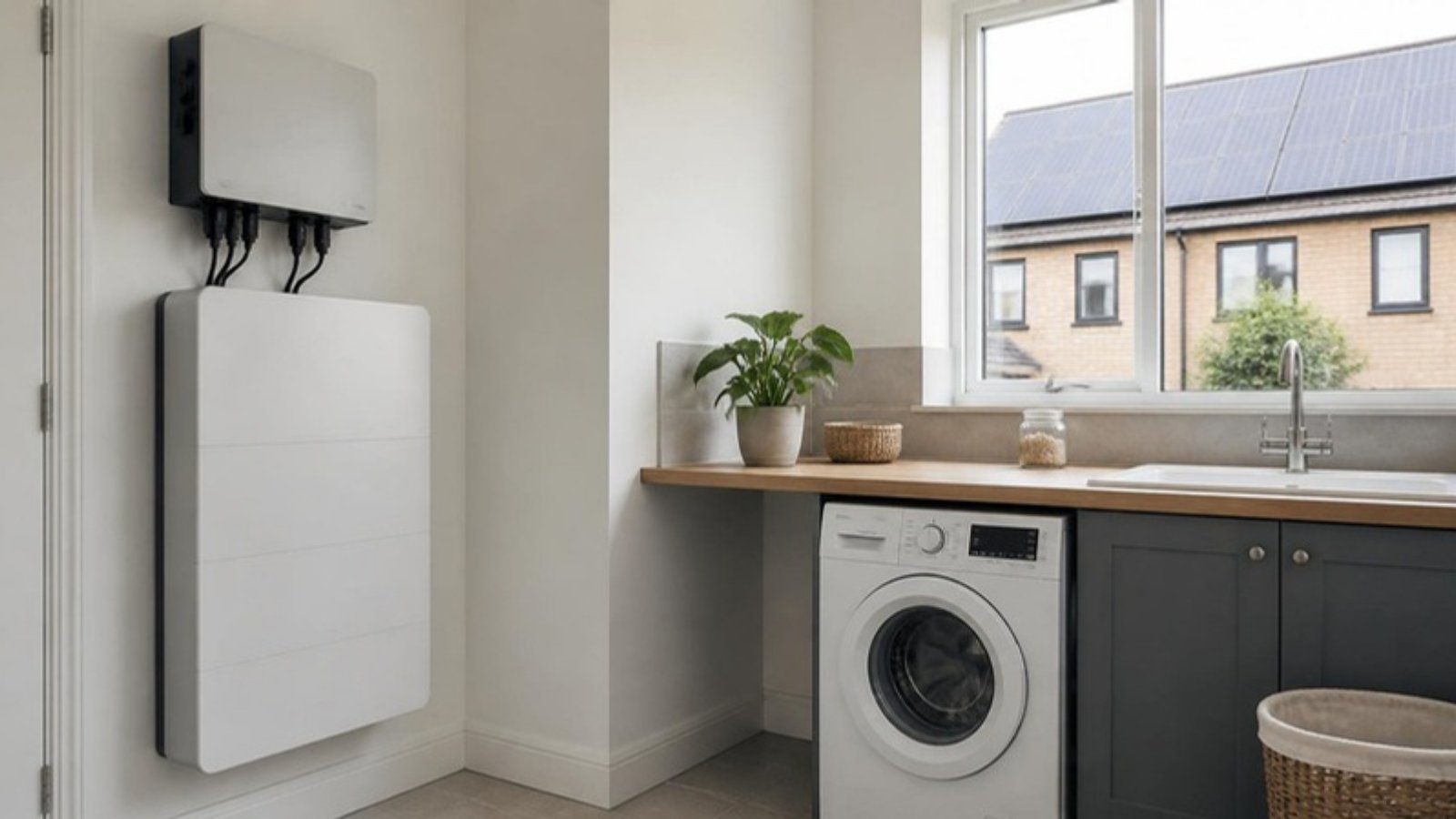
Since Amendment 4 of BS 7671 became mandatory on 15 October 2026, there’s a dedicated chapter (Chapter 57) for stationary secondary batteries — the kind of storage battery you’d mount in a garage, loft or utility room. It covers selecting the right equipment, protection against electric shock and overheating, isolation so the battery can be safely switched off, ventilation and fire protection.
The takeaway: a battery is now treated as a serious part of your electrical installation, not just an appliance plugged in. Make sure whoever installs it is working to the new rules and gives you the right certification.
2. The Future Homes Standard
The government published the final Future Homes Standard on 24 March 2026. For most new homes it comes into force on 24 March 2027. It means new homes will need:
- On-site renewable generation — in practice solar PV, sized at roughly 40% of the ground-floor area (with exceptions, such as buildings over 18m).
- Low-carbon heating — usually a heat pump or heat network, as gas boilers can’t meet the carbon targets.
It doesn’t apply to existing homes, and conversions keep current standards for now. But it shows where the market is heading.
Is your home ready?
Whether you’re adding a battery, solar, a heat pump or an EV charger, the existing electrics need to be up to it. Before any installer turns up, it’s worth checking:
- Your consumer unit — is there space and suitable protection for new circuits? Older plastic boards or rewireable fuses usually need upgrading first.
- Earthing and bonding — these need to be right before you add generation or storage.
- Your supply — larger loads may need the network operator to check the main fuse or connection.
- The condition of the wiring — an EICR is a good starting point if you don’t know when it was last checked.
We can check your installation is ready, carry out consumer unit upgrades and run dedicated circuits, so your battery, solar or heat pump installer has what they need.
Planning a battery, solar or heat pump? Get your consumer unit and wiring checked first — from £75.
- NICEIC – Understanding BS 7671:2018 + Amendment 4:2026
- Home Energy Model – Future Homes Standard published: what you need to know
- Construction Magazine – Future Homes Standard 2026: mandatory solar and the end of fossil fuel heating
- NICEIC – What the Future Homes Standard means for homeowners
This article is general guidance, not legal advice. Always check the latest official guidance for your situation.